


Car customisation has changed quickly across the United Kingdom in recent years. Drivers now prefer surface films instead of permanent paint resprays. Cost savings, easy removal, and added protection drive this strong shift. UK vehicle wrapping and protection services continue growing every year. Drivers want better ways to protect paint while improving vehicle appearance. Two options now dominate this market across the UK automotive scene. These options include vinyl wrap and colour paint protection film. Many drivers confuse these options because they look similar after installation. However, both solutions serve very different purposes for vehicle owners. Understanding these differences helps drivers choose the correct solution confidently. This guide explains the color PPF vs vinyl wrap in simple and clear terms.
What Is Vinyl Wrap
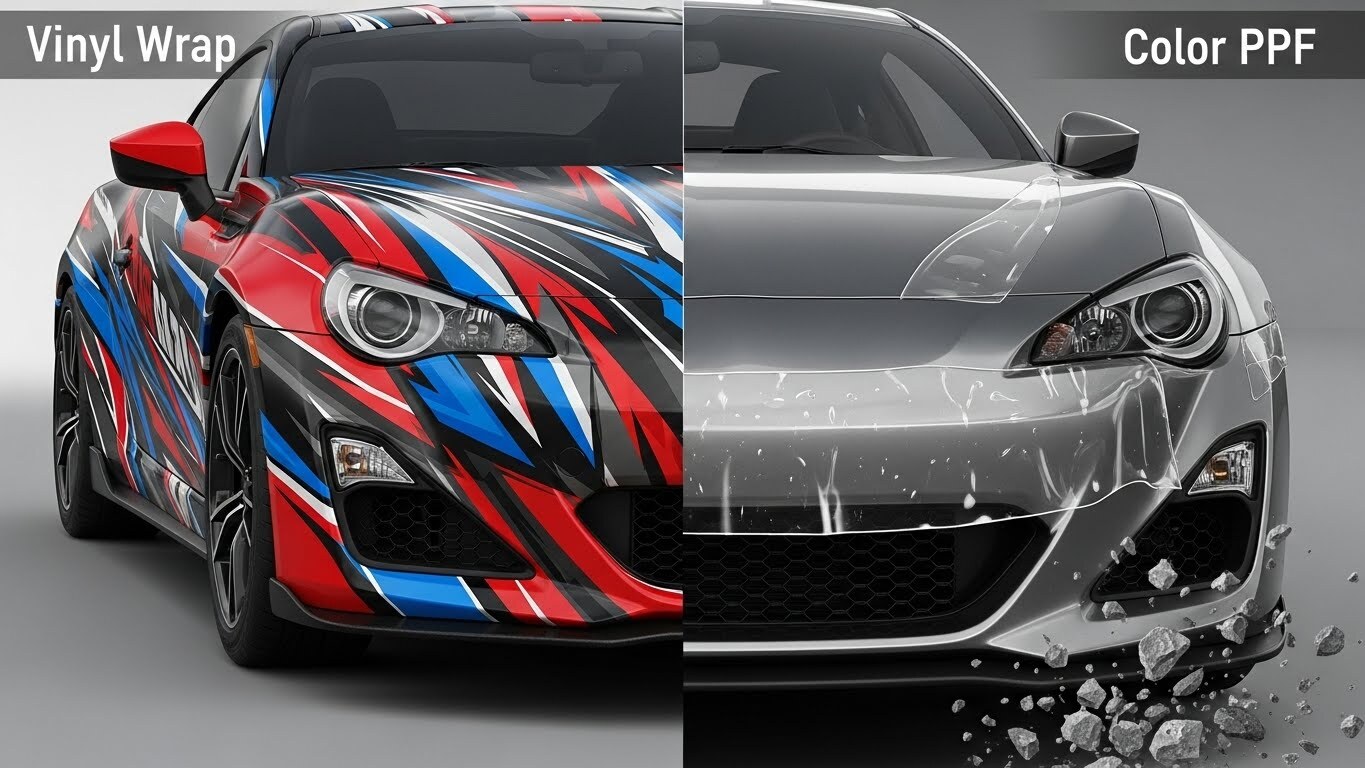
The Vinyl-based surface film is a thin, flexible film designed mainly for visual transformation. It allows drivers to change vehicle colour without altering factory paint. Installers apply vinyl directly over painted surfaces using controlled heat. The wrap adheres smoothly and can later be removed safely. This feature makes vinyl popular among leased vehicle owners. Vinyl-based surface film focuses more on appearance than heavy protection. Popular finishes include gloss, matte, satin, chrome, and textured styles. Many UK drivers enjoy changing styles without long-term commitment. Urban drivers often prefer bold designs for branding or personal expression. Finishes like matte vinyl wrap deliver modern and sporty looks. Chrome vinyl wrap attracts attention in busy city environments. Satin vinyl wrap balances shine and softness for understated elegance. Color shift vinyl changes shade under different lighting conditions. These creative options give vinyl a strong visual appeal. Many drivers choose vinyl because it costs less than full paint resprays. The Vinyl-based surface film installation usually completes within several days. This quick turnaround suits busy schedules and commercial vehicles. However, vinyl focuses mainly on styling rather than heavy surface protection. Understanding this helps drivers evaluate vinyl wrap vs PPF accurately.
What Is Color PPF
Colour paint protection film combines styling with strong surface protection. This film is thicker than vinyl and engineered for impact resistance. It absorbs stone chips, scratches, and minor road debris. Colour PPF also enhances appearance while protecting the factory paint underneath. Unlike vinyl, this film prioritises protection before aesthetics. Its structure allows self-healing under heat from sunlight or warm water. This self-healing ability reduces swirl marks and light scratches. UK drivers face rough road surfaces and frequent weather changes. Motorway debris and tight city parking increase paint damage risks. Colour PPF adoption has increased among premium vehicle owners. Long-term ownership drivers value added paint protection benefits. Colour PPF collections offer modern colours with subtle finishes. These films maintain clarity while adding depth to the vehicle's appearance. Drivers seeking durability often prefer color PPF or vinyl alternatives carefully. Colour PPF supports resale value by preserving original paint condition. This makes it attractive for high-value vehicles and enthusiasts. Understanding this difference helps clarify car wrap vs PPF decisions.
Protection vs Styling
Protection versus styling creates the clearest difference between the two options. The Vinyl-based surface film prioritises appearance and surface-level visual enhancement. It protects lightly against UV exposure and small surface marks. Vinyl does not absorb heavy impacts from stones or debris. Colour PPF focuses on protection first, then appearance. It absorbs stone strikes and resists scratches effectively. The film self-heals minor damage using heat activation. This feature reduces long-term surface wear noticeably. UK drivers often face gravel roads and narrow parking spaces. City driving increases scratch risks from doors and trolleys. Motorway driving exposes paint to high-speed debris. For these conditions, protective performance becomes very important. Drivers must decide whether styling or protection matters more daily. This comparison defines the core of color PPF vs vinyl wrap decisions.
Durability & Lifespan
Vinyl wrap generally lasts three to five years in UK conditions. Weather exposure and maintenance habits affect vinyl lifespan. Harsh winters and road salt can shorten vinyl durability. Direct sunlight exposure also impacts long-term appearance. Colour PPF typically lasts five to ten years. Its thickness handles temperature changes more effectively. The elastic structure resists cracking and fading over time. This durability suits drivers planning long-term ownership. UK market trends show growing interest in extended surface protection. Drivers keeping vehicles beyond finance terms prefer longer lifespan solutions. Durability strongly influences vinyl wrap vs PPF purchasing decisions. Choosing a lifespan depends on ownership length and usage patterns.
Maintenance Comparison
The Vinyl-based surface film requires gentle washing and careful drying methods. Automatic car washes can damage vinyl surfaces quickly. Harsh chemicals reduce adhesive strength and finish quality. Gloss and satin finishes need extra swirl mark prevention. Colour PPF requires less frequent and careful maintenance. It resists stains and environmental contaminants effectively. Self-healing technology removes light scratches automatically. Heat exposure restores surface clarity naturally. This makes colour PPF easier for high-mileage drivers. Daily commuters prefer lower maintenance solutions. Maintenance needs strongly affect color PPF or vinyl choices.
Best Option for UK Drivers
Drivers focused on style often choose vinyl wrap solutions. Seasonal changes and design trends suit vinyl's flexibility well. Leased vehicles benefit from reversible visual upgrades. Gloss vinyl wrap finishes remain popular among trend-focused drivers. Drivers prioritising long-term protection choose colour PPF instead. Resale value preservation matters for premium vehicle owners. UK road conditions favour protective films for daily driving. Frequent rain and motorway travel increase paint damage risks. Colour PPF provides peace of mind for long-term ownership. Each option suits different driver priorities and usage habits. This clarity simplifies the car wrap vs PPF selection confidently.
Conclusion
Vinyl wrap and colour PPF serve clearly different purposes. Vinyl delivers creative freedom at a lower cost. Colour PPF provides superior protection with subtle styling. The best choice depends on ownership length and driving habits. Drivers must balance appearance goals with protection expectations. For many UK drivers, protection now outweighs bold styling needs. Understanding color PPF vs vinyl wrap helps make informed decisions confidently.
Upgrade your vehicle with the right surface solution today. Choose vinyl for style or colour PPF for lasting protection. Speak with experienced professionals to match your driving needs. Protect your paint while enhancing appearance with confidence.