


One tool decides whether your vinyl wrap lasts years or months. The heat gun for vinyl wrap controls stretch, bonding, and durability. Installers rely on controlled heat for smooth professional results. A heat gun softens vinyl so it stretches around curves. It helps film conform into edges and deep recesses. The UK vehicle market continues steady yearly growth. According to the Society of Motor Manufacturers and Traders, the vehicle parc expands consistently. This growth supports demand for styling and protective films. Professional installers now prioritise temperature control over cutting tools. Heat directly affects flexibility, adhesion, and long term performance. Incorrect heating causes shrinkage, lifting, and edge failure.

Poor control also creates wrinkles and surface distortion. Many beginners start using a DIY vinyl wrap beginner guide. However, tool choice determines final durability more than technique. A professional heat gun operates between 50°C and 650°C. Vinyl wrap installation requires a controlled 90°C to 120°C range. Research on polymer films confirms temperature affects elasticity directly. Controlled heating improves flexibility and memory retention significantly. Installers in colder UK climates depend on accurate tools. Stable heat prevents tension build up in stretched areas.
Many people compare a heat gun vs hair dryer vinyl application. Heat guns produce higher and more consistent temperatures. They deliver focused airflow instead of wide dispersal. Focused air helps shape small recessed areas precisely. Search trends show rising interest in DIY tool comparisons. Without proper heat tools, problems appear quickly.
- Poor stretching and weak adhesion
- Visible wrinkles and trapped tension
- Early peeling in wet environments
- Reduced film lifespan
Why a Hair Dryer Cannot Replace a Heat Gun for Vinyl Wrap
A hair dryer lacks power for professional vinyl shaping. The best heat gun for car wrapping ensures stable adjustable output. Precision temperature control protects film from damage.
Temperature Output — Why the Difference Matters at Panel Level
Hair dryers produce heat between 50°C and 90°C. Professional heat guns reach 300°C or higher safely. High performance vinyl needs controlled activation temperatures. Low heat leads to incomplete adhesive bonding. Failure risk increases under cold UK weather conditions. Industry standards emphasise professional surface preparation equipment. Organisations like the British Institute of Cleaning Science promote correct tool usage.
Airflow Concentration — How Focused Heat Changes Vinyl Behaviour
Heat guns focus airflow onto targeted surfaces precisely. This precision reduces overstretching and uneven tension. Controlled air prevents overheating surrounding painted panels. Tight contours require focused heat for proper conformity. Hair dryers disperse air widely and inconsistently.
The Correct Temperature Range for Different TeckWrap Vinyl Films
Different vinyl films respond uniquely to heat. Correct vinyl wrap heat gun temperature ensures stable performance. Professional installers adjust settings based on film type.
Cast Vinyl Films — Working and Post-Heat Temperatures
Cast films stretch smoothly when heated moderately. Cast vinyl heat temperature works best between 90°C and 120°C. Post-heating at 80°C–100°C activates adhesive memory fully. This process prevents future edge and recess lift. Cast films stretch up to 300% before failure.
Calendered films stretch only 80% to 120%. UK climate changes increase the need for stable post-heating. TeckWrap HD series requires minimum 15°C ambient temperature. Cold adhesive cannot achieve correct bond strength. Many installers choose TeckWrap cast vinyl film for durability.
Calendered Films — Lower Heat for Shorter Applications
Calendered films hold higher memory than cast films. Excess heat distorts texture and shortens lifespan. These films suit flat or gently curved panels. Lower heat between 70°C and 100°C works better. Cost sensitive projects often use calendered materials.
Chrome and Metallic Films — Heat Sensitive Surfaces
Chrome and metallic films react strongly to heat. TeckWrap chrome films show streaking above 130°C. Silver streaking becomes permanent after overheating. Installers apply lower heat with longer dwell times. Controlled stretching avoids surface distortion completely.
Premium finishes remain popular across the UK market. Embossed films require lower heat due to surface relief. TeckWrap structure vinyl wrap films need careful temperature control.
How to Use a Heat Gun Correctly During Vinyl Wrap Application
Correct technique ensures durability and visual consistency. Understanding how to use a heat gun on vinyl improves results. Tool control matters more than raw heat output.
Working Distance — Safe Heat Control
Correct working distance protects vinyl from burning. Maintain 15 to 25 centimetres from the nozzle. Closer contact above 80°C causes instant damage. Gradual heating reduces stress within stretched film.
Post-Heating — Locking the Film into Place
Post-heating stabilises stretched vinyl after application. Installers apply heat after the film fully adheres. This step prevents shrinkage and edge failure. Professional training emphasises correct post-heating temperature.
A two speed heat gun supports both stages. Low heat assists pre stretching and conforming. High heat supports edge sealing and activation. Learn detailed methods in this complete vinyl wrap installation guide.
Recessed Panels — Eliminating Lift in Deep Areas
Deep contours require controlled heat and pressure. Stretch vinyl before final positioning on panel. Post-heating removes tension from recessed edges. Proper technique supports effective vinyl wrap edge sealing.
Common Heat Gun Mistakes That Damage Vinyl Wrap
Mistakes often result from poor heat awareness. Even experienced installers respect heat limitations carefully. Proper training reduces costly vinyl replacement.
Holding the Gun Too Close — Damage Risks
Excessive heat burns vinyl instantly above 80°C. Surface texture may distort permanently from overheating. Adhesive layers may weaken under intense heat. Recovery requires lifting, cooling, and reapplying film. Beginners often underestimate heat intensity levels.
Under-Heating in Cold Conditions — Rigid Film Problems
Cold vinyl becomes rigid and difficult to stretch. UK winters reduce surface temperatures significantly. Installers preheat panels before film placement. Controlled heat improves flexibility and conformity. Seasonal variation makes accurate temperature control critical.
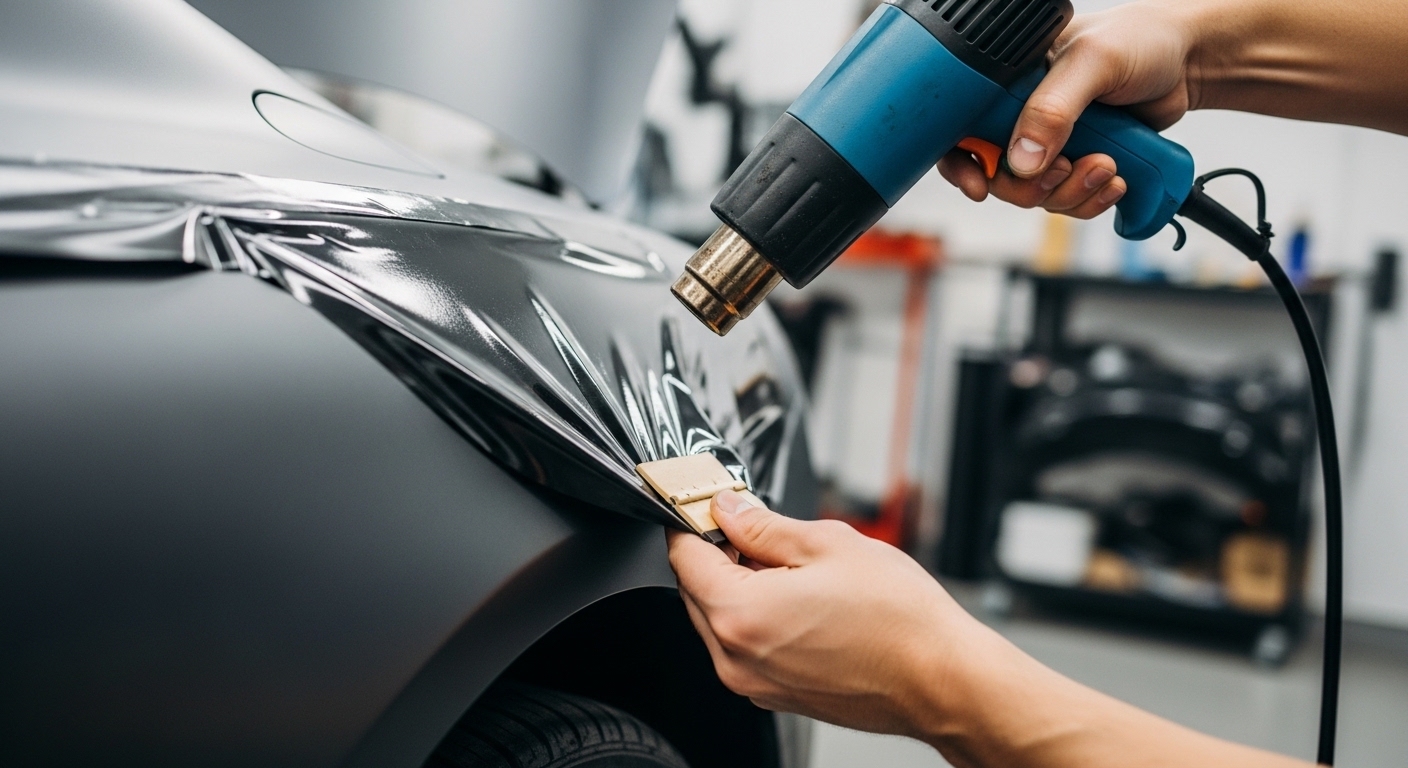
Conclusion: Use the Right Heat at the Right Distance
A heat gun determines wrap durability and finish quality. Correct temperature improves flexibility, adhesion, and lifespan. The vinyl wrap tools UK market continues expanding steadily. Understanding heat behaviour protects vinyl investment long term. Continue learning temperature control for consistent wrapping results.
Choose professional tools for safer long term performance. Select the best heat gun for car wrapping carefully. Explore training resources to refine your installation skills. Use quality materials and controlled heat together. Consider when you buy TeckWrap vinyl wrap for projects.
[ Learn Advanced Heat Control Techniques Today ]
FAQs for Vinyl Heat Gun Use
What temperature should a heat gun be for vinyl wrapping?
The correct working temperature is 90°C to 120°C.
Can I use a hair dryer instead of a heat gun?
A hair dryer does not generate consistent concentrated heat above 60°C.
What is post-heating in vinyl wrap?
Post-heating activates adhesive memory and prevents future lifting.
Can you use a heat gun on chrome vinyl wrap?
Chrome films require heat below 130°C to avoid streaking.
How far should I hold a heat gun?
Hold the nozzle 15–25 cm from the vinyl.