


A single blade mistake can ruin perfect vehicle paint instantly. Many beginners worry about how to cut vinyl without scratching paint. Professional installers solve this problem using knifeless tape technology.
This small tool changed modern wrap installation methods significantly. Installers now perform most film cutting operations without touching paint. Many tutorials inside a DIY vinyl wrap beginner guide recommend this tool first.
Today, wrappers rely heavily on knifeless tape for vinyl wrap installations. The method delivers safer cutting results compared with traditional blades. It also works well alongside a heat gun for vinyl wrap shaping tasks.
What Is Knifeless Tape and How Does It Cut Vinyl Without a Knife?
Modern vehicle wraps require extremely careful cutting techniques. A simple blade slip can damage factory paint instantly. Professional installers therefore use this blade-free cutting tape instead of knives. Knifeless tape is a vinyl wrap installation tool that uses a polymer filament to cut through film precisely without contacting the painted surface beneath. This method protects paint and ensures extremely clean film edges. Installers also describe knifeless tape vinyl wrap how it works using simple mechanics.
Knifeless tape uses a polymer filament between adhesive layers. Pulling the filament slices through vinyl film safely. Professional installers use knifeless tape vs craft knife for safer cutting. The method reduces paint damage risk dramatically during installation.
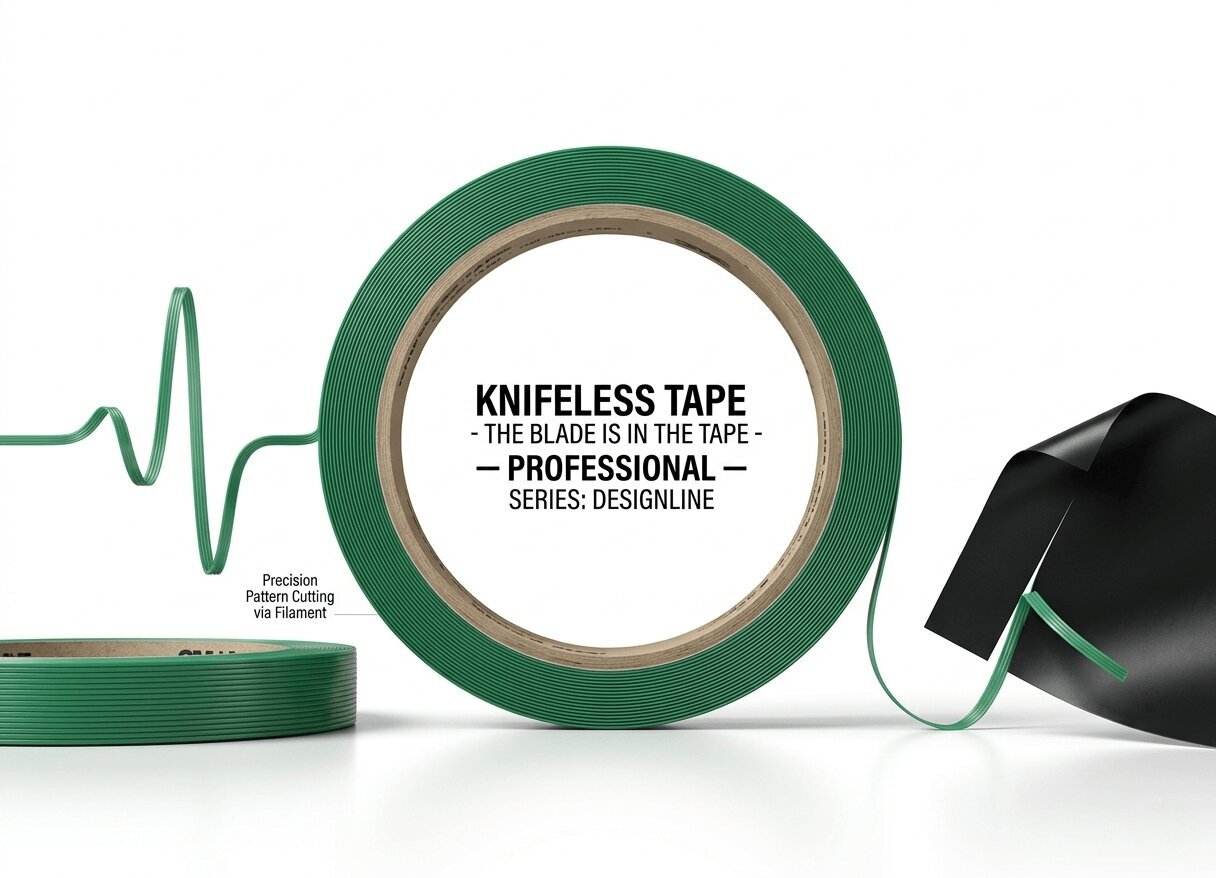
The Filament Pull Mechanism: How a Thread Cuts Through Vinyl Film
The secret lies inside the tape structure itself. This blade-free cutting tape contains a strong polymer filament inside adhesive layers. The filament remains hidden under the vinyl film initially. Pulling the filament cuts the vinyl like a tiny blade. The cutting action occurs above the painted surface safely.
This mechanism protects the vehicle’s factory clear coat layer. It also creates extremely precise edges across panel shapes. Professional wrappers rely heavily on this vinyl wrap cutting tool daily. It ensures consistent cutting accuracy during complex installations.
Finish Line vs Bridge Cut vs Design Line: Which Type for Which Job
Different tape types exist for different wrapping tasks. Professionals compare knifeless tape finish line vs bridge cut frequently. Finish Line tape measures 6.4mm wide for bodyline cutting. It is the most common tape for blade-free cutting tape door panel bodyline work.
Bridge Cut tape measures 50mm wide for overlapping film layers. Installers use it to cut two layers simultaneously at seams. Design Line tape helps create curved graphics and patterns. Many installers simply call it design line tape during design work. Each tape type solves a specific cutting situation effectively.
Where to Use Knifeless Tape on a Car Wrap
Professional installers rely heavily on this paint-safe cutting tape for vinyl wrap jobs. They use it during approximately 60–70 percent of all cutting operations. Many wrappers learn these techniques inside a full vinyl wrap installation guide. The tool works especially well near delicate paint areas. Below are the most common installation zones for this method.
Door Panel Bodylines: The Most Common Use Case
Vehicle doors often contain strong styling bodylines. These lines provide natural boundaries for vinyl wrap seams.
Installers apply the blade-free cutting tape door panel bodyline cuts along these lines. The tape follows the bodyline before applying the vinyl film.
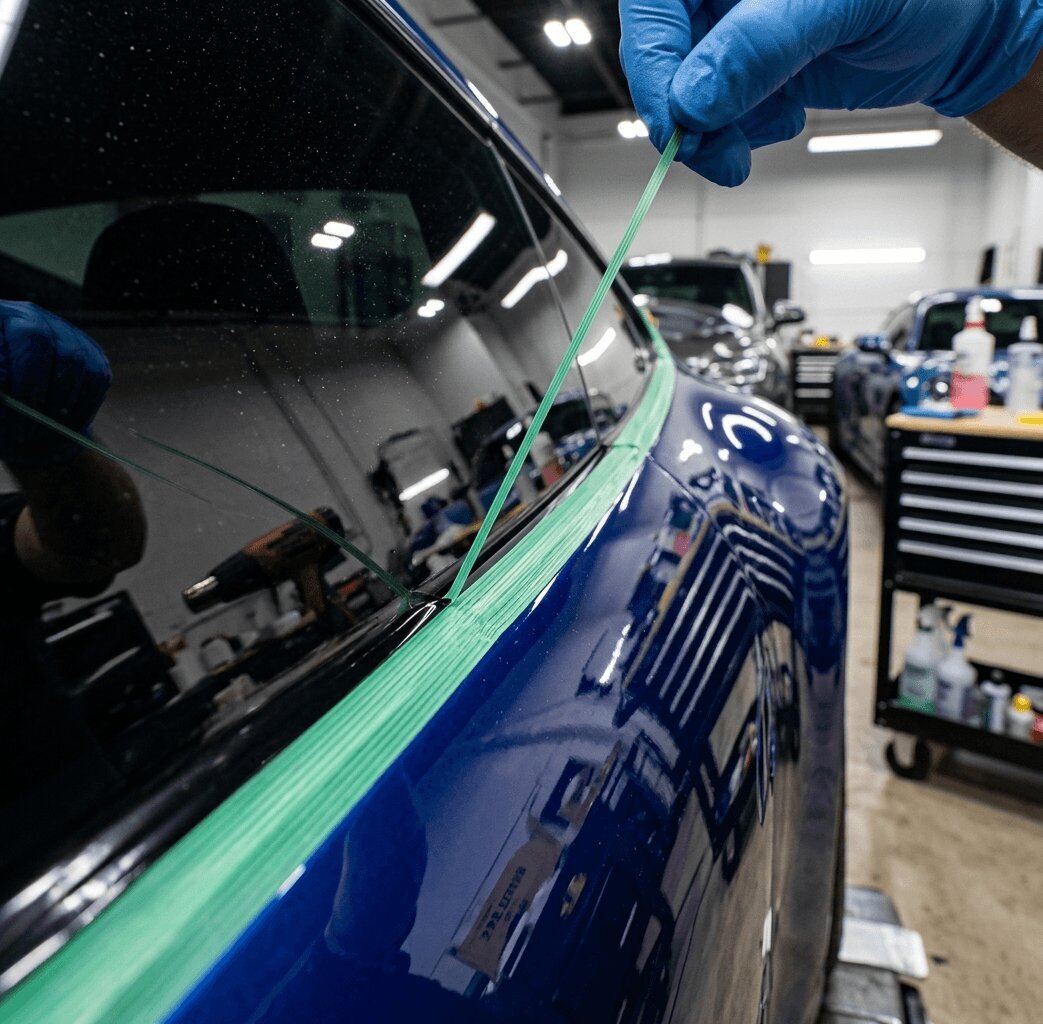
Once the film sits over the tape, installers pull the filament. This action produces a perfect seam along the door panel. The result appears extremely clean and factory-like.
Bumper and Bonnet Edges: Where Blade Access Is Physically Restricted
Front bumpers often contain complex shapes and tight spaces. Using blades here becomes extremely difficult and risky.
Professionals rely on blade-free cutting tape bumper edge techniques instead. They position the tape before placing the vinyl film. The filament then cuts the film along bumper edges cleanly.
This method also works well when learning how to wrap a car hood. Bonnet edges often require safe cutting techniques around curves.
ADAS Sensors, Radar Modules and Camera Housings — Why This Is Not Optional on Modern Cars
Modern vehicles contain many driver safety systems. These include radar modules, sensors, and camera housings.
Installers avoid blades near these sensitive electronics. Professional wrappers therefore prefer knifeless tape ADAS sensor installations.
ADAS sensors, radar modules, and cameras react poorly to blade pressure. Vibration from blade cutting may cause sensor misalignment. The blade-free cutting tape eliminates this risk entirely during installation.
Roof and Bonnet Panel Seams with Overlapping Film
Some wrap installations require overlapping vinyl layers. This method improves durability around panel seams.
Installers apply Bridge Cut tape along seam locations first. Then they apply overlapping vinyl panels over the tape.
The filament cuts both layers simultaneously with precision. This technique creates clean edges across large surfaces.
How to Apply and Pull Knifeless Tape Correctly
Learning how to use this blade-free cutting tape improves installation quality immediately. Correct technique ensures smooth cutting results every time. The process includes three basic steps during vinyl wrapping.
Step 1: Position the Tape Before You Apply the Vinyl
Installers first clean the vehicle surface carefully. Then they apply the blade-free cutting tape along the planned cut line.
The tape follows panel edges, bodylines, or design paths. Installers press the tape firmly against the paint surface. Correct placement determines final seam accuracy later.
Step 2: Apply and Smooth the Film Over the Tape
Next, installers apply the vinyl film across the taped area. They smooth the film using squeegees and heat tools.
A heat gun for vinyl wrap softens the film slightly. This step ensures the film sits tightly over the tape. The filament remains hidden under the vinyl layer.
Step 3: Pull the Filament: Correct Angle, Speed and Tension
The final step involves pulling the filament thread. This action cuts the vinyl film precisely along the tape path. Installers must maintain the correct knifeless tape filament pull angle. The ideal angle ranges between 30 and 45 degrees. Steeper angles increase the risk of tearing vinyl film.
The correct filament pull angle is 30–45 degrees. Slow pulling speed produces cleaner cutting edges. The blade-free cutting tape works on cast and calendered vinyl films normally. Very thick films may require slower filament pull speed.
When a Blade Is Still Required: The Limits of Knifeless Tape
Even advanced tools cannot replace blades completely. Installers still use knives for very small trimming tasks. These tasks include:
- trimming inside deep panel gaps
- finishing edges inside door jambs
- cutting excess film behind trim pieces
Professional wrappers combine both methods during installations. However, most visible cutting uses knifeless tape vs craft knife today. The tape significantly reduces risk of paint damage.
Is Knifeless Tape Worth the Extra Cost?
Cost comparison clearly shows the value of this tool. A reel of this paint-safe cutting tape typically costs £20–£30 in the UK. One scratched panel respray costs between £300 and £800. The savings become obvious for professional installers quickly.
Key advantages of this paint-safe cutting tape for vinyl wrap include:
- protects paint during vinyl cutting operations
- creates extremely clean wrap seams
- reduces installation stress for beginners
- improves safety near sensors and cameras
This tool quickly becomes essential for serious wrapping work. Installers searching for supplies can now buy knifeless tape UK easily.
[SHOP VINYL WRAP AND INSTALLATION TOOLS]
Frequently Asked Questions
What is knifeless tape used for?
Knifeless tape cuts vinyl wrap film without using a blade. The filament slices the vinyl while protecting the paint beneath.
What is the difference between Finish Line and Bridge Cut?
The comparison between this paint-safe cutting tape finish line vs bridge cut depends on job type. Finish Line tape measures 6.4mm and works best on panel bodylines. Bridge Cut tape measures 50mm and cuts two overlapping film layers simultaneously.
Can you use knifeless tape near ADAS sensors?
Yes, installers strongly recommend this paint-safe cutting tape ADAS sensor installation. The method avoids blade pressure near radar modules and camera housings.
What angle should you pull the knifeless tape filament?
The correct paint-safe cutting tape filament pull angle stays between 30 and 45 degrees. This angle cuts vinyl cleanly without tearing the film surface.