

23rd Oct 2026
How to Price a Vehicle Wrap Job in 2026: A Guide for UK Installers
Even a busy workshop can lose money on a finished wrap. Pricing a vehicle wrap job starts with recording costs. You need actual film quantities, working hours, overheads, and planned profit. Searches for vehicle wrap pricing UK often mix customer and installer questions. This guide covers the installer's side: building a quote that pays for everything.
The Wrap Pricing Formula at a Glance
Start with cost-plus pricing instead of copying another workshop's finished quote. Use this worked example to see how each quote component connects, then fill in the last column with your own figures.
TeckWrap's Blue Gem (GAL02-HD) 1.52 x 18 m roll was priced at £540.00 on its product page when checked on 21 October 2026. That works out to £30 per metre. This example uses that roll price as its starting point. It assumes fourteen metres cover the panels and four metres become unusable waste, so the whole roll is consumed by this one job. Every labour cost, overhead amount, and margin below is illustrative. These figures do not represent standard prices charged across UK workshops.
|
Cost line |
What goes in it |
Illustrative example |
Your figure |
|
Film |
Illustrative: 14 metres of film at £30 per metre |
£420.00 |
|
|
Waste |
Illustrative: 4 unusable metres at £30 per metre |
£120.00 |
|
|
Prep |
Illustrative cleaning and surface preparation allowance |
£120.00 |
|
|
Install labour |
Illustrative paid installation labour allocation |
£420.00 |
|
|
Post-heating and finishing |
Illustrative checking, refitting, and finishing costs |
£120.00 |
|
|
Consumables and tools |
Illustrative blades, cleaners, and tool wear |
£40.00 |
|
|
Overheads |
Illustrative allocated workshop and administration costs |
£160.00 |
|
|
Total job costs |
Sum of the seven cost lines |
£1,400.00 |
|
|
Target margin |
Illustrative margin of 20% on the selling price |
20% |
|
|
Profit included |
£1,750 minus £1,400 |
£350.00 |
|
|
Selling price before VAT |
£1,400 divided by (1 − 0.20) |
£1,750.00 |
These figures are illustrative and not a recommended price. The film and waste allocations together equal one complete purchased roll. Keep any reusable offcuts in stock instead of treating them as waste. Keep operating costs separate from profit in any quote template or calculator you use.
Selling price before VAT = total costs ÷ (1 − target margin)
The illustrative profit equals 20% of the selling price, not costs. Replace these assumptions with actual job records before quoting any customer. Add applicable VAT after calculating your final price before tax.
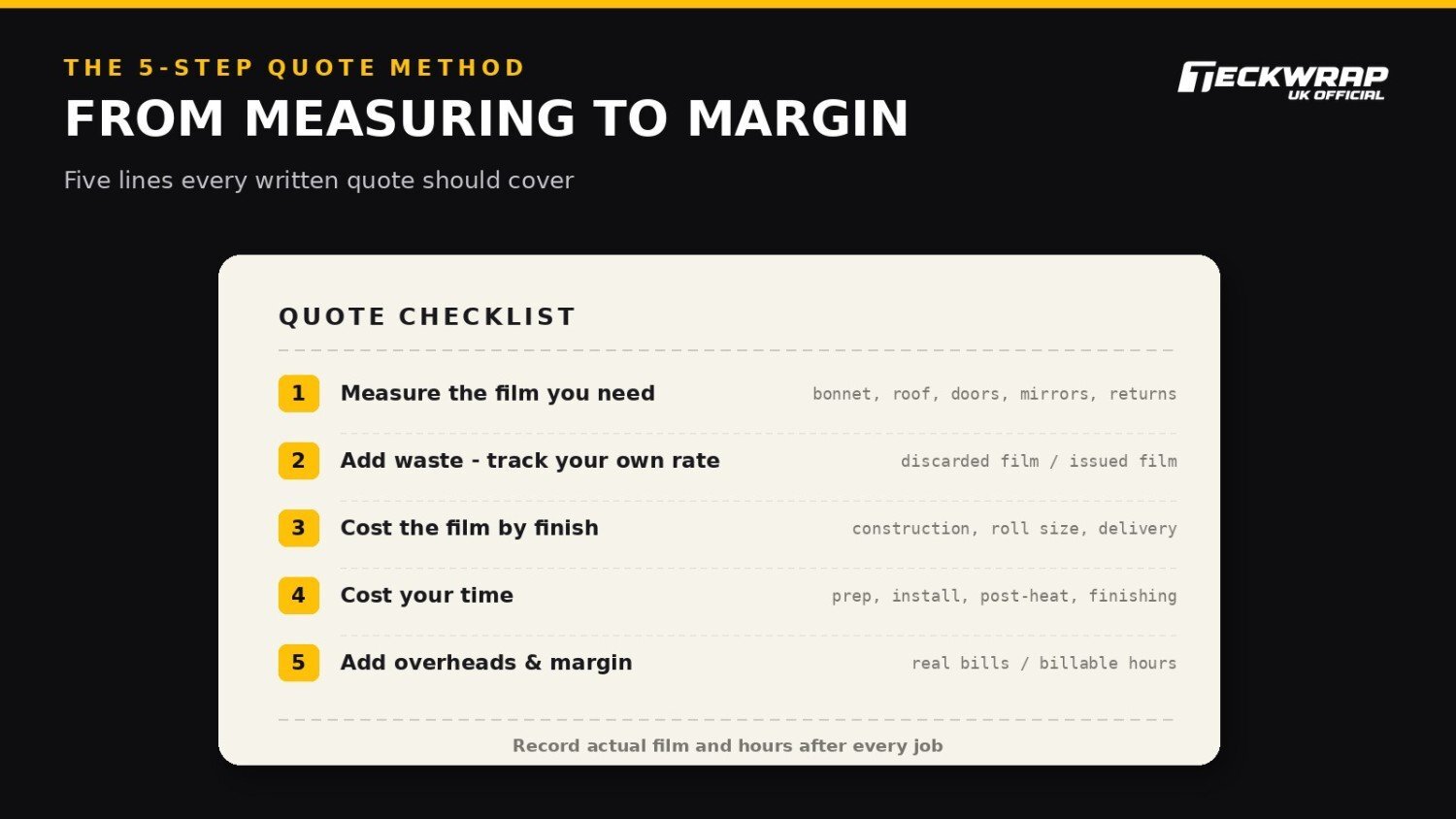
Step 1: Measure and Work Out the Film You Need
Measure the actual vehicle rather than trusting its model name alone. Check the bonnet, roof, doors, bumpers, mirrors, and other covered parts. Add fitting allowance for returns, overlaps, edges, and safe handling.
TeckWrap's Blue Gem (GAL02-HD) listing specifies film measuring 1.52 metres wide. Its published technical details also describe an 18-metre roll length.
Plan your cuts across the usable roll width before ordering. Count the film you must buy, not just visible coverage. Follow TeckWrap's vinyl wrap measurement guide for detailed measuring guidance.
Step 2: Add Waste, and Track Your Own Rate
Waste costs money even when no customer ever sees it. Cutting strips, trimming edges, and replacing damaged pieces consume paid film. Curved bumpers and deep channels can leave fewer reusable offcuts. New finishes may also take extra practice before clean fitting. Never copy a blanket waste percentage from another installer's quote.
Record the film issued and usable film remaining after every job. Divide discarded film by total issued film to calculate historical waste. Include extra material when the project needs matched film batches. Keep leftover rolls recorded as stock when you can reuse them. Charge the necessary purchase cost when leftovers have little reuse value.
Step 3: Cost the Film (Finish and Construction Change the Price)
Compare your purchase terms against the roll length you need. Compare gloss vinyl wrap, matte vinyl wrap, and satin vinyl wrap. Also inspect the chrome vinyl wrap range before quoting reflective finishes.
Film construction also matters when you plan the installation method. Cast vinyl generally costs more and handles demanding curves differently. Calendared vinyl commonly offers another option for suitable surfaces. Read TeckWrap's cast vs calendared vinyl guide before comparing constructions.
Confirm the selected roll length and checkout total before quoting. TeckWrap's product page showed free UK shipping on orders over £250 when checked on 21 October 2026, so include delivery in your film cost when an order falls below that. TeckWrap offers individual A4 film samples for checking real finishes. Use samples to discuss colour, surface appearance, and handling expectations.
Step 4: Cost Your Time (Prep, Install, Post-Heating, Finishing)
Inspect existing paint, trim, old vinyl, and visible damage before quoting. Agree any extra repair or removal work before confirming scope. Then budget time for cleaning and full surface decontamination.
Allow for safely removing handles, badges, lights, and other agreed fittings. Count the actual installers working on each part of the job. Include material positioning, heat forming, trimming, and careful edge work. After application, include all required post-heating and manufacturer-directed safety checks. Budget time for refitting parts, inspection, cleaning, and customer handover.
Record start and finish times against each separate work stage. Compare estimated hours against actual hours after every finished job. Build future estimates around similar vehicles and familiar film types. Add specialist design and print time when your job includes graphics. Sign shops should also price printing, lamination, and machine operation separately.
Step 5: Add Overheads and Margin
Rent, electricity, insurance, software, and administration all create operating costs. Spread these costs across the working hours you can bill. Do not spread them across hours when the workshop stays unused.
Choose an overhead rate based on your real business spending. Apply that rate to the planned time for each job.
Your labour charge must pay installers, including yourself when fitting film. Profit remains only after you cover labour and other costs. Select a profit margin target that suits your business needs. Keep margin separate from the markup used for individual materials.
Before confirming a discount, recalculate the final remaining profit amount. The car wrapping business guide covers wider planning beyond individual quotes.
Common Pricing Mistakes
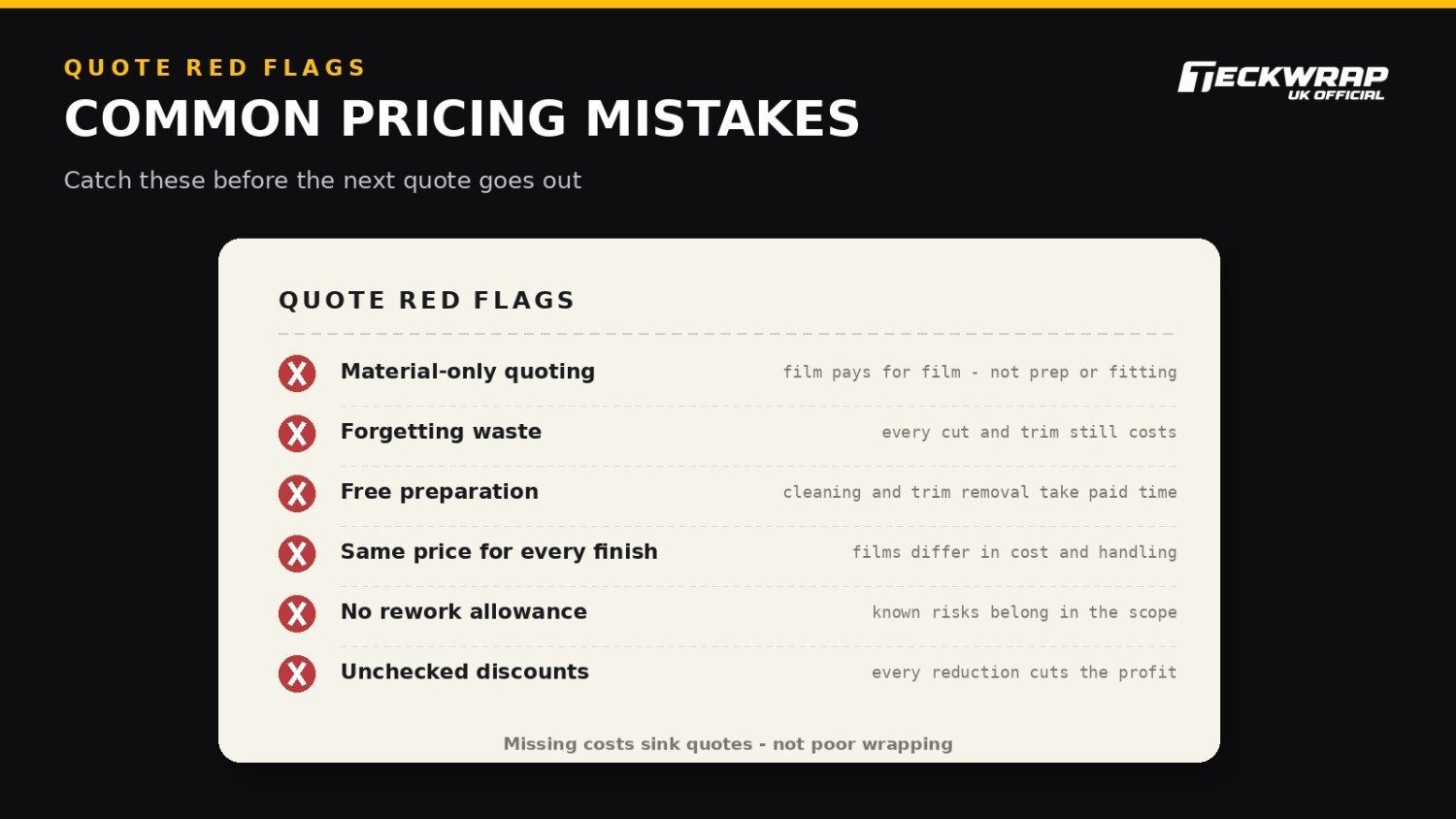
Most underpriced jobs fail through missing costs rather than poor wrapping. Review these common errors before sending your next customer quote.
- Material-only quotes: film purchases never pay for preparation or skilled fitting.
- Missing waste: replacement panels and discarded cuts still consume purchased material.
- Free preparation: cleaning, trim removal, and repairs require working time.
- Identical finish pricing: different films may change materials and handling effort.
- No rework allowance: known job risks deserve sensible planning and clear scope.
- Unchecked discounts: every reduction changes the profit remaining after costs.
Pricing Wrap Job Types (Full Wrap, Partial, Fleet)
Full Vehicle Wraps
Assess bumpers, door returns, roof access, and any removed fittings. Base your final quote on that vehicle's agreed coverage. Compare owner expectations using the car wrap pricing guide.
Partial Wraps and Accents
Roofs, mirrors, and bonnets can involve difficult edges or removal. Set a minimum viable charge based on your true costs. Do not assume that half the area means half the labour. TeckWrap's wrap cost factors guide explains customer choices without setting your prices.
Fleet Work
Confirm vehicle variants, delivery dates, access, and matching colour requirements. Shared setup can reduce some costs across planned repeat jobs. However, different fittings and damage can raise individual vehicle costs. Record each vehicle separately before offering a combined fleet quote.
Use the 2026 van pricing guide when estimating larger commercial vehicles. For specialist work, consult TeckWrap's trailer wrap costing guide.
Pricing FAQs
How do I price a vehicle wrap job?
Start by measuring the vehicle and recording its agreed coverage. Calculate required film, usable offcuts, and your actual material purchase cost. Add preparation, installation labour, finishing, consumables, and allocated workshop overheads. Then set your selling price using your chosen profit margin. Record the completed job's actual costs to improve your next estimate.
Should I price per square metre or per vehicle?
Use square metres when repeat work follows similar shapes and steps. This approach often suits simple graphics or regular sign production. Use vehicle-based quotes when body shapes change the labour required. Full colour changes usually need closer attention to trims and curves. Both methods work better when real costs support their rates.
How much waste should I allow for?
Use the waste rate your own completed jobs actually show. Different installers lose different amounts during fitting, trimming, and correction. Complex curves, small inlays, and unfamiliar films often create extra offcuts. Track purchased film against finished coverage and reusable leftovers. Update your allowance as your staff gain experience with each material.
Does the choice of film change the price I should quote?
Yes, film choice changes purchase cost and sometimes installation effort. Compare the selected finish, construction, roll size, and fitting instructions. Test unfamiliar materials before agreeing to difficult curves or tight timelines. Recalculate waste and working time when the material changes. Never charge every customer the same amount regardless of film.
How do I stop under-quoting wrap jobs?
Use one repeatable checklist before sending every written customer quote. Record material, waste, cleaning, fitting, finishing, overheads, and target profit. Compare your quoted figures with actual results after completing work. Adjust future estimates when the same tasks repeatedly take longer. Check discounts against profit instead of matching competing prices blindly.
Get TeckWrap Trade Pricing
Knowing how much to charge for a car wrap starts with knowing exactly what the film costs you. TeckWrap UK offers a trade account for business buyers, and our guide on how to open a trade account explains the process. Use the trade login to check the pricing available to your account.
Order actual film samples before planning unfamiliar colour or finish work.