

13th Jul 2026
Ceramic Coating vs PPF: Which Paint Protection Is Right for You?
PPF and ceramic coating protect your paint in two different ways, so the right choice depends on what you're protecting against: PPF is a physical film that stops chips, scratches, and impact damage, while ceramic coating is a chemical sealant that repels water, dirt, and UV rays. For UK drivers dealing with motorway grit and winter road salt, the strongest result comes from using both together, with ceramic coating applied over the PPF for full protection and a deeper shine.
UK drivers face genuine risks from stone chips and harsh winter road salt, and installers across the country now offer both products from independent studios and dealership counters. This guide breaks down PPF and ceramic coating using practical, no-nonsense comparisons, so you can decide what your car actually needs rather than what a sales pitch tells you to buy.
They Serve Different Purposes: And Work Best Together
PPF and ceramic coating solve two separate protection problems. PPF blocks physical damage like rock chips and scratches. Ceramic coating repels water, dirt, and harmful UV rays instead. Neither product fully replaces what the other one does, and ceramic coating can be applied over PPF for the best of both.
Think of PPF as armour and ceramic coating as a shield's polish. One prevents damage physically, while the other repels dirt chemically. Both jobs matter, but neither replaces the other completely. Recognising this early saves UK buyers from confusing, overlapping marketing claims.
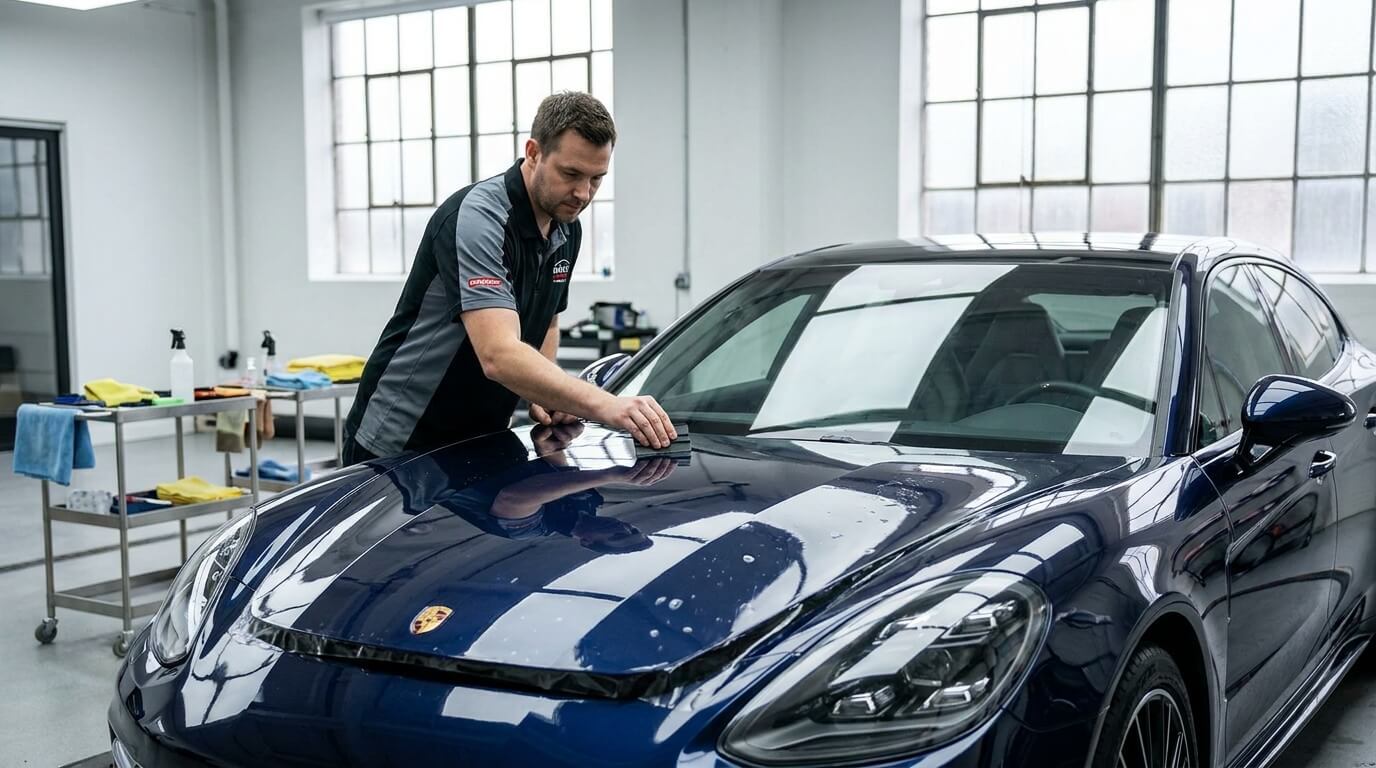
PPF: Physical Barrier Protection
Paint protection film works as a thick, physical shield for paint. It sits directly on top of your vehicle's factory paint job. Quality PPF measures roughly 150 to 200 microns in thickness. This urethane layer absorbs impacts before they reach the surface below. Professional installers apply it directly onto clean, prepped paint surfaces. The film remains virtually invisible once properly installed and cured.
Many manufacturers now offer self-healing topcoats within their PPF products, and testing confirms the film stays flexible across every UK season. TeckWrap UK is one such manufacturer: its PPF is built from ESTANE® TPU film, independently tested to block 99% or more of UV rays, and backed by a 5-year manufacturer warranty. Specifications like these, rather than vague claims about market position, are what should guide a buying decision.
What PPF protects against
PPF guards against rock chips thrown up from motorway driving. It resists scratches caused by branches, car washes, or debris. The film also protects against minor scuffs and light abrasions. Some PPF products even feature self-healing topcoats for small surface marks. Heavy impacts from gravel roads rarely penetrate a properly installed film, and even harsh UK winter road salt struggles to damage protected paint underneath.
Front bumpers, bonnets, and mirrors typically receive the thickest coverage, since these panels face the most direct exposure during regular UK driving. Rear wheel arches also benefit from film on frequently-driven UK cars, and motorway commuters see the fastest return on this extra coverage.
PPF benefits & drawbacks
PPF offers unmatched protection against physical, impact-based paint damage. It typically lasts between five and ten years with care. UK full-vehicle PPF installations usually cost between £3,000 and £7,000, while partial front-end coverage costs considerably less, starting around £800. The film maintains factory paint value by preventing permanent surface damage. However, PPF costs more than most other protection options, and installation takes longer, often requiring several days of work.
Visible seams can sometimes appear on complex body panel curves, though skilled installers minimise these through careful panel wrapping techniques. Choosing an experienced installer, and understanding what a proper PPF installation process actually involves, reduces most of these drawbacks significantly. Many UK installers include a manufacturer warranty as standard, typically covering yellowing, cracking, and premature film failure for several years depending on the film used.
Ceramic Coating: Chemical Sealant
Ceramic coating works completely differently from physical film-based protection. It bonds chemically with your paint at a molecular level, creating a hard, glass-like layer sitting above the clear coat. The coating measures roughly one to six microns thick and cures over several days into a durable, protective shell.
Professional-grade formulas typically outperform consumer DIY coating products, and proper paint correction beforehand ensures the coating bonds evenly across panels. Skipping paint correction traps existing swirl marks beneath the new layer. TeckWrap UK, the same manufacturer behind ESTANE® TPU film tested to block 99%+ of UV rays and covered by a 5-year warranty, also supplies professional-grade ceramic coating systems to UK installers, a track record worth more than an unverified "market leader" tagline.
What ceramic coating protects against
Ceramic coating shields paint from harmful UV rays and sun fading. It repels water, preventing stubborn water spots from forming easily. The coating also resists chemical stains from bird droppings and tree sap.
Everyday dirt and road grime struggle to bond onto the surface. Oxidation and paint fading slow down significantly under a ceramic layer. Light chemical exposure from fuel spills causes noticeably less surface damage, and direct sunlight fades paint far more slowly with this added protection. Regular exposure to acid rain also causes far less lasting harm.
Brake dust and UK road salt also fail to bond as easily, which matters given how often UK roads get gritted. Coastal UK regions benefit from stronger resistance to salt air, and owners near the coast often report noticeably longer-lasting gloss retention.
Ceramic benefits & drawbacks
Owners love ceramic coating for the deep, shiny look it provides, and its hydrophobic nature makes normal washing far more convenient. Following a consistent ceramic coating maintenance routine also helps the finish last closer to its full lifespan. UK ceramic coating packages typically range from £300 to £2,000, with most full-vehicle applications costing between £500 and £1,200.
Ceramic coating is not enough to provide protection against rock chips or scratches, and it needs an adequately prepped, flawless paint surface beforehand. Durability ranges between 2 and 5 years, depending on the quality of the coating, and incorrect application can result in streaking or an uneven, patchy finish.
Professional application typically outlasts consumer DIY coating kits. Entry-level packages in the UK begin at around £300, while premium systems cost more than £1,500.
Head-to-Head Comparison Table
This table compares both options across the factors that matter most. Reviewing each row side by side simplifies your final decision. Notice how each product excels in genuinely different areas, this pattern is exactly why combining both remains the smartest overall choice. All figures reflect current UK market pricing and typical durability.
|
Factor |
PPF |
Ceramic Coating |
|
Protection against chips |
Excellent, 150–200 micron physical barrier |
None, offers no impact resistance |
|
UV protection |
Moderate, some UV resistance included |
Excellent, strong UV ray protection |
|
Water resistance |
Moderate, water sheets off somewhat |
Excellent, highly hydrophobic surface |
|
Durability |
5 to 10 years with proper care |
2 to 5 years, varies by product |
|
Cost (UK) |
£800–£2,000 partial, £3,000–£7,000 full |
£300–£2,000, typically £500–£1,200 |
|
Installation |
Longer, often several days needed |
Faster, usually completed within one day |
|
Maintenance |
Moderate, needs careful, gentle washing |
Low, easier everyday maintenance routine |
|
Appearance |
Clear, slightly less glossy alone |
Glossy, deep and reflective shine |
The Winning Strategy: PPF + Ceramic Coating
Smart owners combine PPF and ceramic coating for complete protection. This layered approach follows a clear, logical sequence: PPF first absorbs and prevents physical, impact-based paint damage, and ceramic coating applied over the PPF adds deep gloss and hydrophobic water resistance. Skipping either step leaves a genuine gap in your paint's defence, since ceramic coating needs a stable surface underneath to bond properly.
- PPF first absorbs and prevents physical, impact-based paint damage.
- Ceramic coating over PPF adds deep gloss and hydrophobic water resistance.
- Result: maximum protection and maximum shine working together.
Many installers offer combined PPF and ceramic coating packages at a reduced price versus booking each service separately.
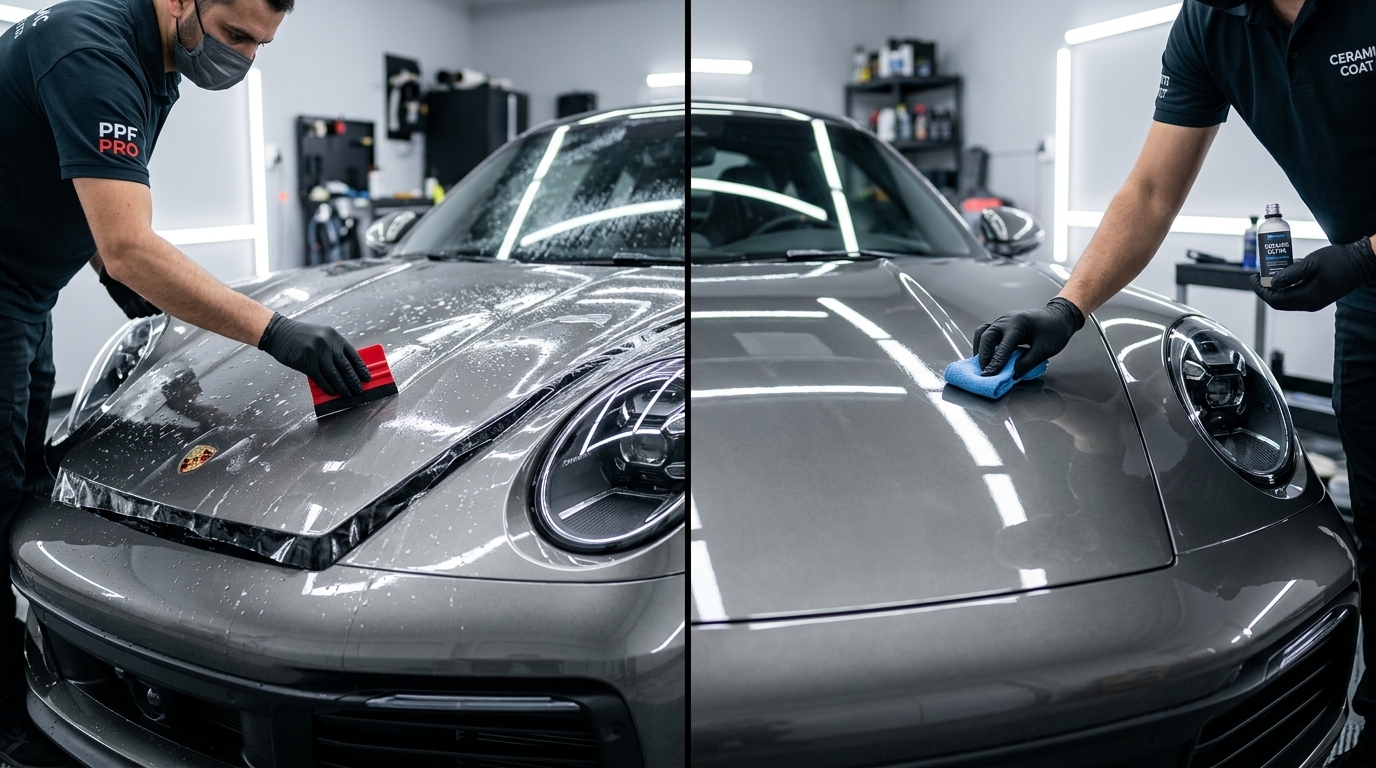
Cost Breakdown: PPF vs Ceramic vs Both
UK ceramic coating alone typically costs £300 to £2,000 overall. Full-vehicle PPF installations usually range from £3,000 to £7,000. Combining PPF with a ceramic topcoat costs more than either option alone, though many UK installers bundle both services together for a reduced combined price. Think of this combined cost as a long-term investment rather than an expense, both products together extend the life of your vehicle's paint, and UK resale platforms often note PPF and coating history as a selling point.
Higher upfront costs often save money through reduced future paint correction work, and resale value benefits from paint that stays chip-free and glossy. Cheaper coatings often wear out faster, costing more money long term. Request itemised quotes so you understand exactly what each price covers, and ask whether the quoted price includes a written protection warranty, a clear warranty protects your investment against installation-related defects later on.
Choosing the right protection keeps your paint looking new for longer. Book your free paint protection consultation to get a quote tailored to your vehicle.
FAQ: PPF vs Ceramic Coating
Can I apply ceramic coating without PPF?
Yes, ceramic coating alone gives good UV protection and water resistance, but zero protection against chips and scratches. The paint underneath stays vulnerable to everyday physical damage, which is why most detail-conscious UK owners choose both.
Which should I buy on a limited budget?
Choose PPF first if your budget only allows one option. It protects against the most common and costly type of damage; chips and scratches, while ceramic coating mainly improves appearance. UK partial PPF packages start from around £800.
Can ceramic coating be applied over PPF?
Yes. This is the recommended order, since PPF handles physical protection and ceramic coating adds gloss and hydrophobic water resistance on top. Applying ceramic coating over cured PPF does not affect the film's performance or warranty.
Will ceramic coating stop stone chips?
No. Ceramic coating is a thin chemical sealant with no meaningful impact resistance. Only PPF, with its 150–200 micron physical layer, is designed to absorb chip and scratch damage from road debris.
How long does a full PPF installation take?
A full-vehicle PPF installation typically takes two to five days, depending on the installer and vehicle size. Partial front-end coverage is usually completed within a single day.
Does PPF turn yellow over time?
Quality PPF with a UV-stable topcoat, such as ESTANE® TPU film, resists yellowing for years when properly maintained. Cheaper, unbranded films are more prone to yellowing, which is why checking the warranty terms before installation matters.