

4th Nov 2026
Sign Shop Diversification: Adding Vehicle Wrapping to Your Service Menu
Your sign shop already handles vinyl, so why rush into full wraps? Adding vehicle wrapping works best when you start small. Vehicles bring curved panels, careful heating and longer fitting work, but you can offer colour changes without buying another printing system. TeckWrap UK Official supplies colour-change films and colour paint protection film, giving sign makers choices beyond printed graphics. Start with clear limits, build practical skills, and order film carefully.
Sign Work vs Vehicle Wrapping at a Glance
The same workshop skills support both services, but the methods differ. Use this comparison before adding vehicle work to your offering.
|
Work area |
Sign work |
Vehicle wrapping |
What changes for you |
|
Material handling |
Smaller sheets and cut graphics |
Wide colour-change film |
Control larger, loose panels |
|
Cutting and plotting |
Letters, logos, and shaped graphics |
Panel cuts, edges, and returns |
Plan cuts around vehicle shapes |
|
Surface prep |
Flat boards and prepared surfaces |
Painted panels, trims, and recesses |
Inspect paint and clean hidden edges |
|
Application |
Mostly flat, simple surfaces |
Curves, corners, and deep shapes |
Control stretch and film tension |
|
Heat use |
Limited shaping where required |
Controlled forming and post-heating |
Follow each film's instructions |
|
Workspace |
Sign benches and fitting areas |
Clean bay with vehicle clearance |
Control temperature, dust, and access |
|
Tools |
Plotters, knives, and squeegees |
Heat tools, buffers, and panel aids |
Add suitable tools selectively |
|
Time per job |
Familiar small application stages |
More preparation and finishing |
Record labour by task |
|
Customer expectations |
Clear graphic placement |
Consistent colour and neat edges |
Agree coverage and aftercare |
Skills You Already Have
Your cutting skills already teach careful planning before material meets surfaces. You understand straight lines, matching positions, and keeping designs level, and those skills carry over to colour-change wraps on suitable panels.
Existing vinyl cutting knowledge also supports clean edges and careful trimming. TeckWrap's lesson on the art of cutting offers further advice for wrap work, and the Install Guide has a separate recommendations page for cut vinyl film. Our vinyl decal cutting guide covers the skills you already recognise.
You already know that dust and grease can weaken adhesion. Careful cleaning and dry surfaces matter during vehicle wrapping too. Your squeegee handling gives you a useful starting point for application, although larger panels demand wider movements and more film control.
Sign makers also understand customer briefs, artwork approval, and written quotes. Use those skills to agree vehicle coverage before cutting material. Confirm whether customers expect painted edges, trims, or visible returns. A clear job description prevents arguments about unfinished or excluded areas.
What Is Genuinely New
Vehicle bodies move between shallow curves, sharp corners, and tight recesses. Large film pieces must follow those shapes without excessive stretching. Heat helps form suitable films, but uncontrolled heating creates new problems. Different finishes may also need different handling and fitting methods.
Post-heating matters after forming film across stretched or difficult areas. Follow the selected product's instructions rather than copying another film's temperature. Check how each finish handles edges, overlaps, and surface texture. TeckWrap's Install Guide provides separate recommendations for several film finishes.
Three of its lessons are good places to start for the techniques vehicle work adds: surface energy, the cold pre-stretch technique for perfect corners, and reading wrinkles when wrapping a roof.
Vehicle work also adds trim checks, panel order, and careful reassembly. You need enough space to open doors and reach edges. Keep your fitting bay clean and control its working temperature. Check your insurance and workshop arrangements before accepting customer vehicles.
Start Small: Your First Wrap Services
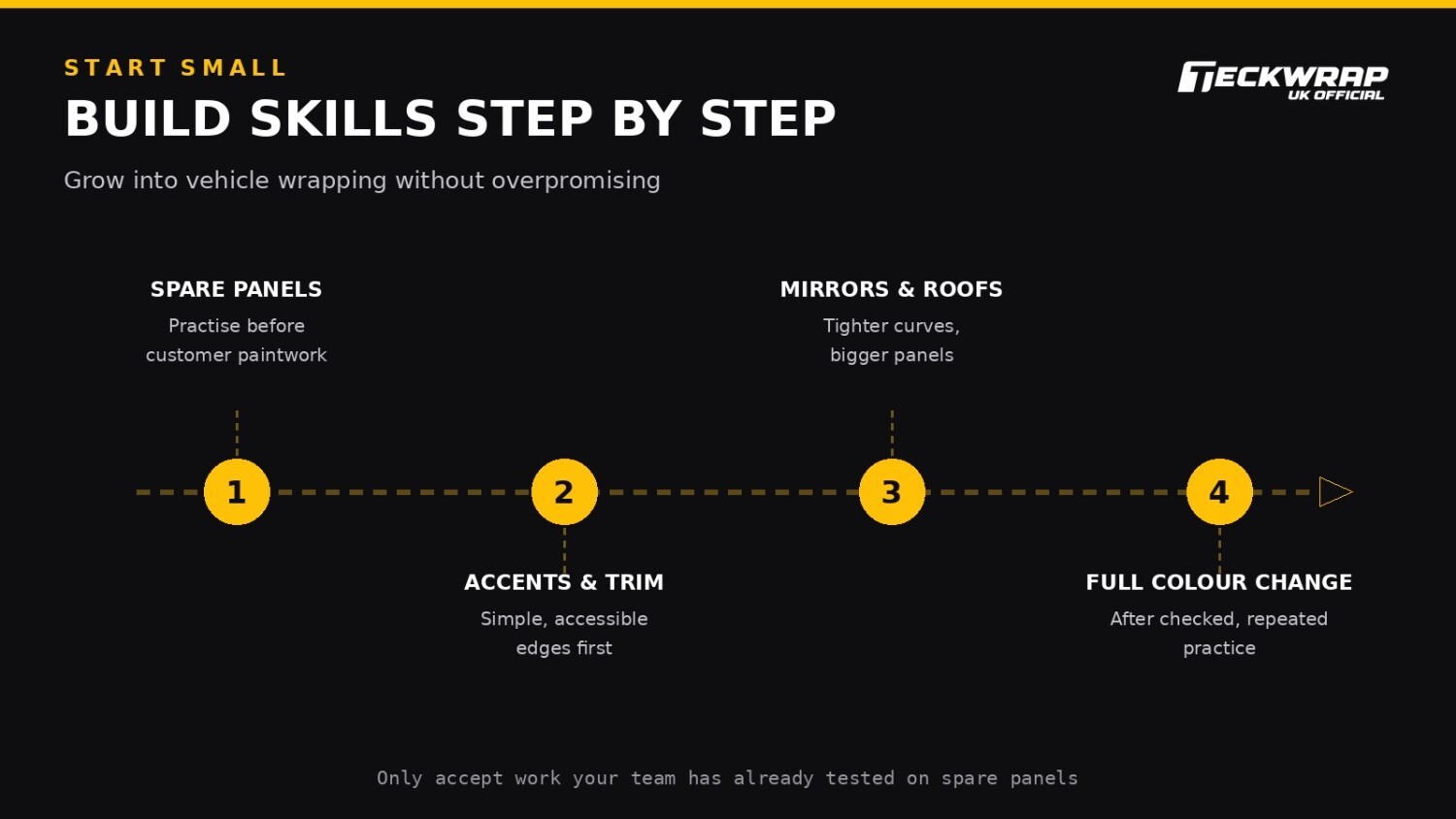
If you plan to start vehicle wrapping, begin small. Practise on suitable spare panels before working on customer paintwork, and only accept work that matches your team's tested fitting ability.
Begin with simple accent areas that have accessible edges. Chrome delete can follow once your team handles narrow trim shapes; our chrome delete guide covers typical trim concerns. Avoid fragile fittings or difficult recesses until your method improves.
Mirror caps introduce tighter curves and more complicated film positioning, and our mirror wrapping guide shows why those shapes need care. Roofs offer larger panels but introduce aerials, edges, and wrinkles, so review the roof wrapping guide before accepting those jobs. Move towards full colour changes only after repeated, checked practice.
Keep printed graphics and colour-change wrapping separate when discussing materials. TeckWrap's offer focuses on colour-change wrap film and colour paint protection film. The commercial vehicle guide explains broader vehicle branding choices.
Training Your Team
Begin with TeckWrap's free Install Guide and Install Videos. They cover specific finishes and demonstrations on vehicle body panels. Video topics include bumpers, mirrors, roofs, spoilers, and common mistakes.
Give each fitter supervised practice before promising complex customer work. Use trial panels to review film positioning, edge finishing, and heating. Record mistakes and repeat difficult shapes until results become consistent.
TeckWrap also advertises hands-on training at its UK training centre. Certified trainers cover advanced techniques, finishing skills, and aftercare. Our installer network guide explains the trade support and training offer. Course dates and costs aren't listed online, so contact the team to confirm them before making workshop arrangements.
For wider skills advice, read why learning vehicle wrapping is a skill in high demand. Supervised practice builds skills that videos alone cannot.
Stocking Film Without Over-Investing
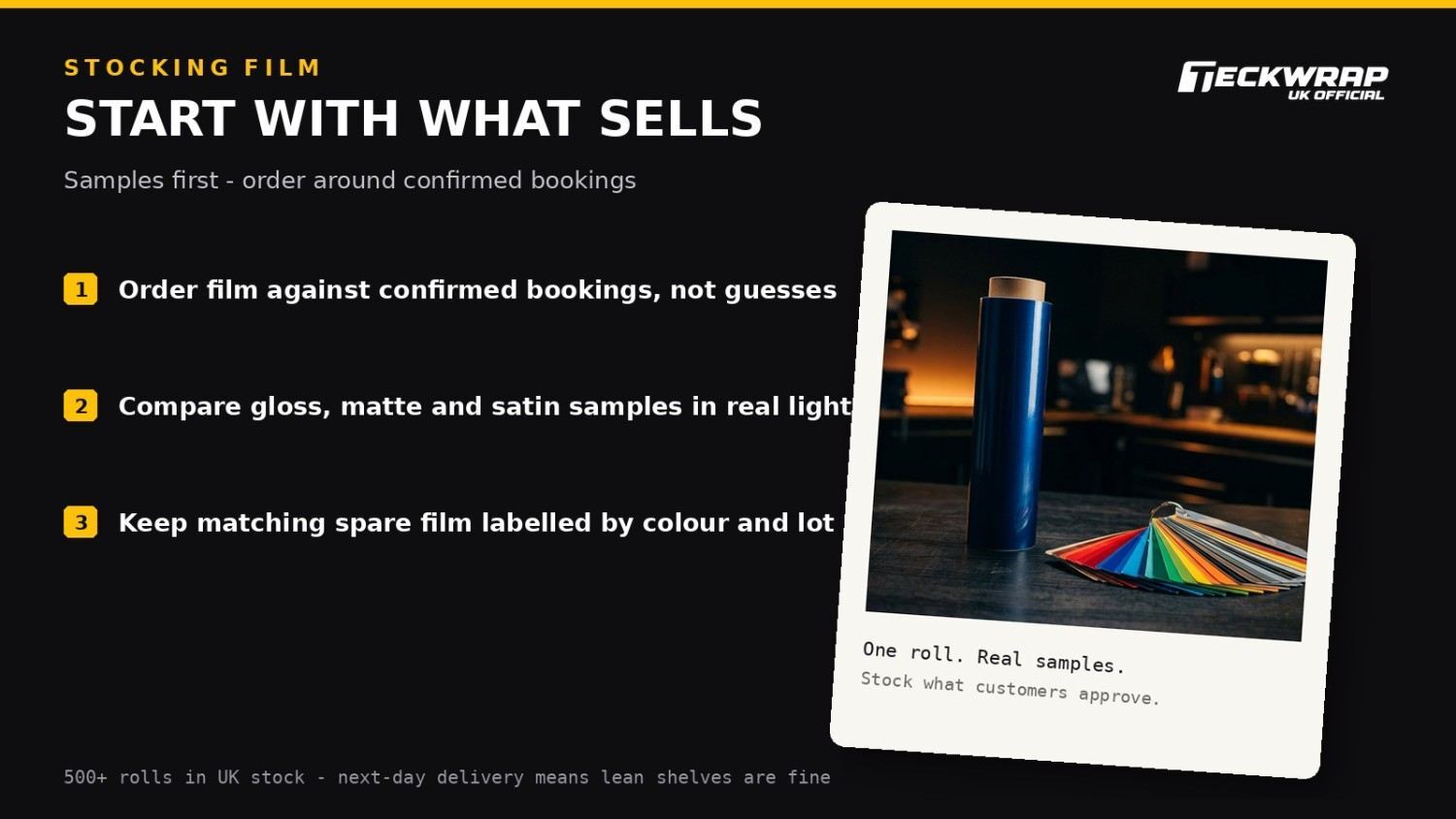
Start with customer requests instead of filling shelves with random colours. Show clients physical samples before ordering a complete vehicle's film, and order A4 samples to compare finishes under real lighting.
Compare gloss vinyl, matte vinyl, and satin vinyl in real light. The core gloss, matte and satin range is calendared, with air-release channels. Film thickness and installation limits still depend on the selected finish, so check the individual product specifications before deciding which panels suit it.
TeckWrap UK holds over 500 rolls in stock, with 300+ colours available for next-day delivery (homepage, checked 27 October 2026). Its Shipping & Returns policy says orders are typically processed within one business day, with next business day delivery after dispatch, so allow for that when you promise an installation date. Check each colour's stock status before confirming a booking. Order materials around confirmed bookings rather than uncertain future demand. Keep matching spare film when a job needs later corrections, and for multiple vehicles, follow consistent lot and stock checking practices.
Pricing and Quoting Your First Jobs
Do not copy a sign fitting rate onto curved vehicle work. Start with material, expected waste, preparation, labour, and overheads. Include time for removing fittings, post-heating, checks, and reassembly. Treat learning time honestly instead of giving difficult work away. Our guide on how to price a vehicle wrap job explains the cost-plus pricing method. Record your real time and material use after each job.
Customers should understand what the agreed price actually covers. List excluded repairs, damage, and extra trim work before fitting. Use the car wrapping business guide for wider planning beyond quoting.
Sign Shop Wrapping FAQs
Can a sign shop add vehicle wrapping to its services?
Yes, sign makers can add colour-change wrapping with suitable preparation. Existing vinyl skills provide a base for accurate cutting and application. Vehicle curves, heat forming, and edge finishing need further practice. Check your workshop space and business arrangements before taking bookings, and start with limited work that matches your proven skills.
Which sign-shop skills carry over to vehicle wrapping?
Accurate measuring, cutting, cleaning, and squeegee control all remain useful. Your team already knows how to follow artwork and customer instructions. These habits support careful planning and clear job approvals. However, large film panels introduce new handling and stretching demands, so practise those skills before offering complete vehicle colour changes.
What is the hardest part of moving from sign work to wraps?
Complex curves and stretched film often create the biggest adjustment. The installer must control tension, heat, and edge finishing together, and vehicle trims make access harder than flat sign surfaces. Use spare panels to practise without customer pressure, and always follow each film's fitting guidance.
Where can sign makers learn vehicle wrapping?
Start with TeckWrap's free installation lessons and demonstration videos. They cover several finishes and different vehicle body parts. TeckWrap also offers hands-on UK training through its certified trainers. Contact the team to ask about course dates and costs, and combine that learning with supervised practice before accepting complex jobs.
Do I need to buy lots of film to start?
No, you can begin with samples and confirmed customer orders. Select finishes based on actual demand instead of guesses. Check stock status and delivery timing before accepting a tight fitting deadline. Order the film for each agreed project, and keep useful offcuts recorded for future small jobs.
Get TeckWrap Trade Pricing
A careful start lets your sign shop expand without unnecessary stock. Use our guide on how to open a trade account when planning regular film purchases, and ask about training before promising advanced work on customer vehicles.
Book Training or Join the Installer Network → | See TeckWrap Trade Pricing →